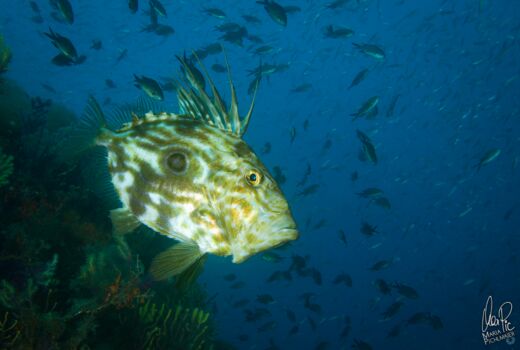
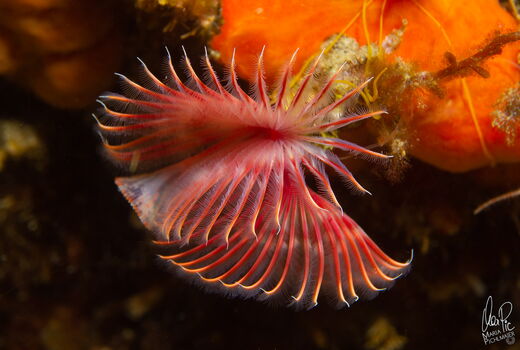
A "who is who" of the Mediterranean

Illustrated Guide to the Species of the Mediterranean / Costa Brava

I’d like to make one thing clear from the outset: I am NOT A BIOLOGIST.
However, I am very interested in the subject and have built up a huge collection of photographs over the years.
The images published here are all from my camera, ©Maria Pichlmaier.
I have identified the species to the best of my knowledge and belief, but cannot guarantee their accuracy.

(For the time being) I have deliberately chosen not to include descriptive texts so as not to infringe any copyright.
More detailed information can easily be found online 😉
Source references at the bottom of the page.
 

Mediterranean

by Maria Pichlmaier

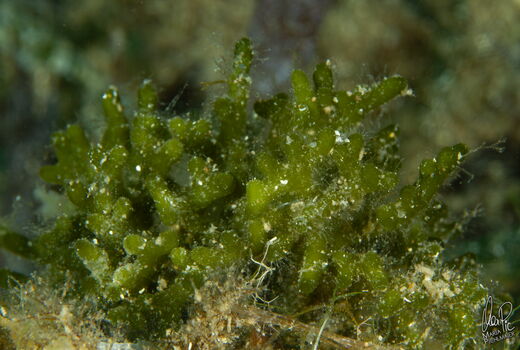
Algae

‘Decorative material’ in brown, green and red

+
Mediterranean

by Maria Pichlmaier

Bryozoans

Delicate, artistic formations often turn out to be colonies of bryozoans.

+
Mediterranean

by Maria Pichlmaier

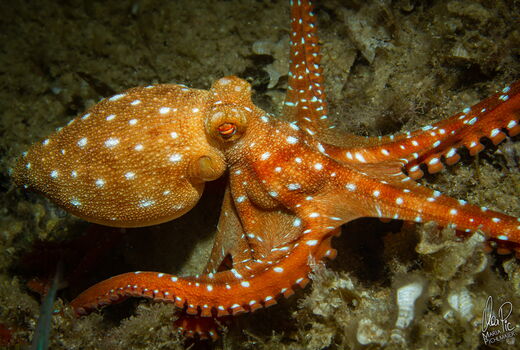
Cephalopods

Mysterious, intelligent ‘aliens’ underwater

+
Mediterranean

by Maria Pichlmaier

Cnidarians

Even though some of them look like flowers, they’re animals!

+
Mittelmeer

by Maria Pichlmaier

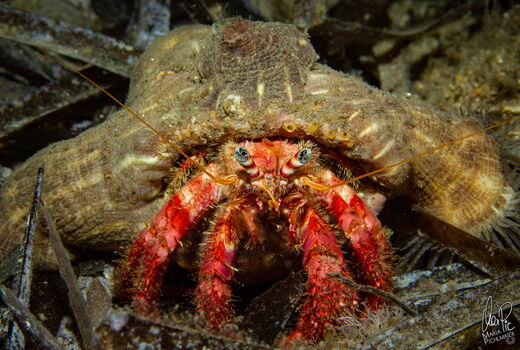
Crustaceans

They can swim, crawl or even be sessile: crustaceans are a very diverse group of animals.

+
Mediterranean

by Maria Pichlmaier

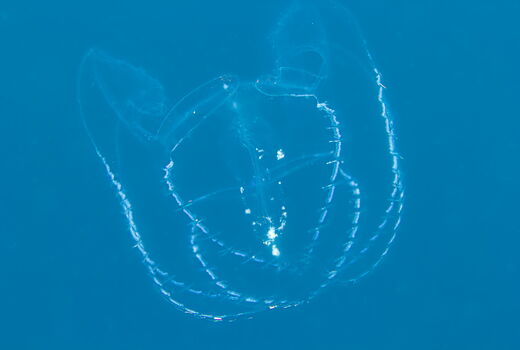
Ctenophores

You might mistake them for jellyfish – yet, in evolutionary and functional terms, comb jellies / Ctenophores are fundamentally different. Their unique mode of locomotion, using rows of cilia, is a real highlight of the animal kingdom!

+
Mediterranean

by Maria Pichlmaier

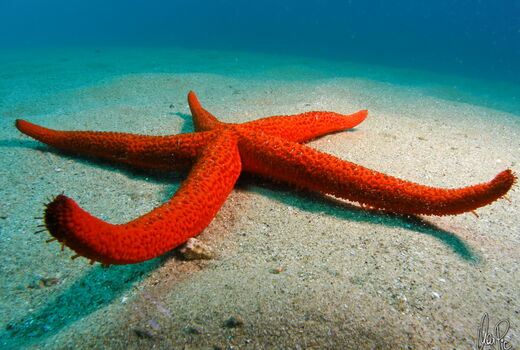
Echinoderms

Starfish, sea urchins and sea cucumbers

+
Mediterranean

by Maria Pichlmaier

Fish (Chordata)

When you hear the word ‘sea creatures’, who doesn’t think of fish first?
And there are plenty of them... 🐟🐠🐡

+
Mediterranean

by Maria Pichlmaier

Gastropods

From the delicate red-tipped star snail to the mighty Triton’s horn: nudibranchs and seaslugs add variety and splashes of colour to the reef!

+
Mediterranean

by Maria Pichlmaier

Sponges (Porifera)

Mostly (though not always) inconspicuous on walls, rocks, under overhangs or hidden in seaweed, there are many different and colourful sponges to be found.

+
Mediterranean

by Maria Pichlmaier

Tunicates

Whether living alone or in colonies, whether sessile (sea squirts) or in open water (salps) – tunicates are always a real eye-catcher!

+
Mediterranean

by Maria Pichlmaier

Worms

From elegant sabellids to colourful flatworms and even the perfectly camouflaged ‘Aliens’ – why do worms have such a bad reputation?

+

Source references:

Online:

Club d'ImmersiĂł Biologia :: Guia d'espĂšcies (cibsub.cat)

WoRMS - World Register of Marine Species

Meerwasser-Lexikon

OPK Opistobranquis

GROC opistobranquis

DORIS - Données d'Observations pour la Reconnaissance et l'Identification de la faune et la flore Subaquatique (ffessm.fr)

Wikipedia – Die freie EnzyklopĂ€die


Books:

  • Illustrierter NaturfĂŒhrer Mittelmeer
    by Enric Ballesteros and Toni Llobet
  • Was lebt im Mittelmeer
    by Matthias Bergbauer, Bernd Humberg, Manuela Kirschner
  • Farbatlas Mittelmeerfauna
    by Helmut Göthel
  • Niedere Tiere Mittelmeer und Atlantik
    by Peter Wirtz and Helmut Debelius
  • Fisch-FĂŒhrer Mittelmeer und Atlantik
    by Helmut Debelius
  • Meeresfische Westeuropa und Mittelmeer
    by Patrick Louisy
  • Els nudibranquis del mar catalĂ 
    by Manuel Ballesteros, Miquel Pontes and Enric Madrenas
  • Nudibranchi del Mediterraneo
    by Egidio Trainnito and Mauro Doneddu
  • Atlante di flora & fauna del Mediterraneo
    by Egidio Trainito and Rossella Baldacconi