YouTube
 Facebook
 Instagram
 Newsletter
Cratena peregrina
DE: Wanderfadenschnecke
EN: Pilgrim hervia
ES: Nudibranquio peregrino
FR: Cratène pérégrine
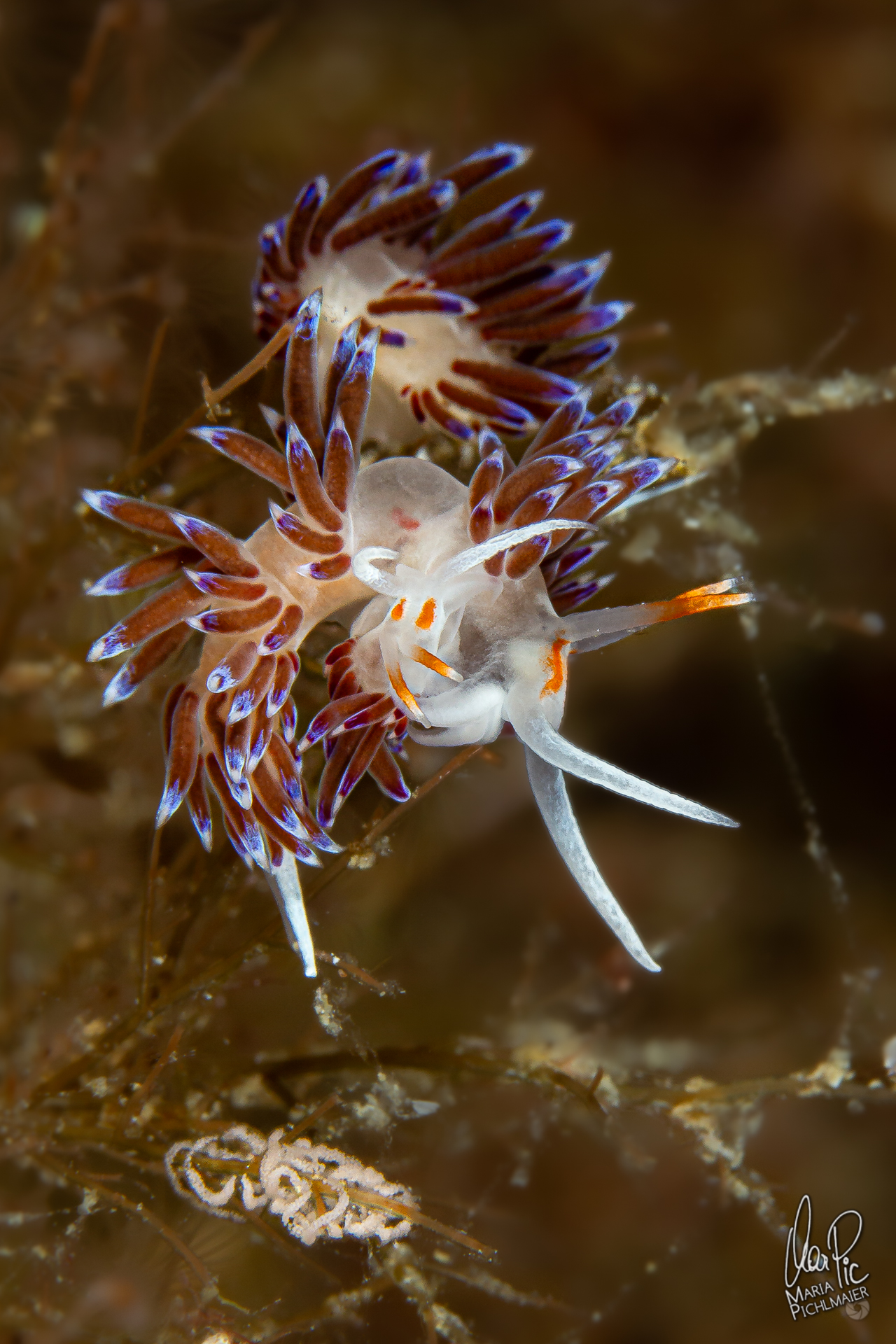
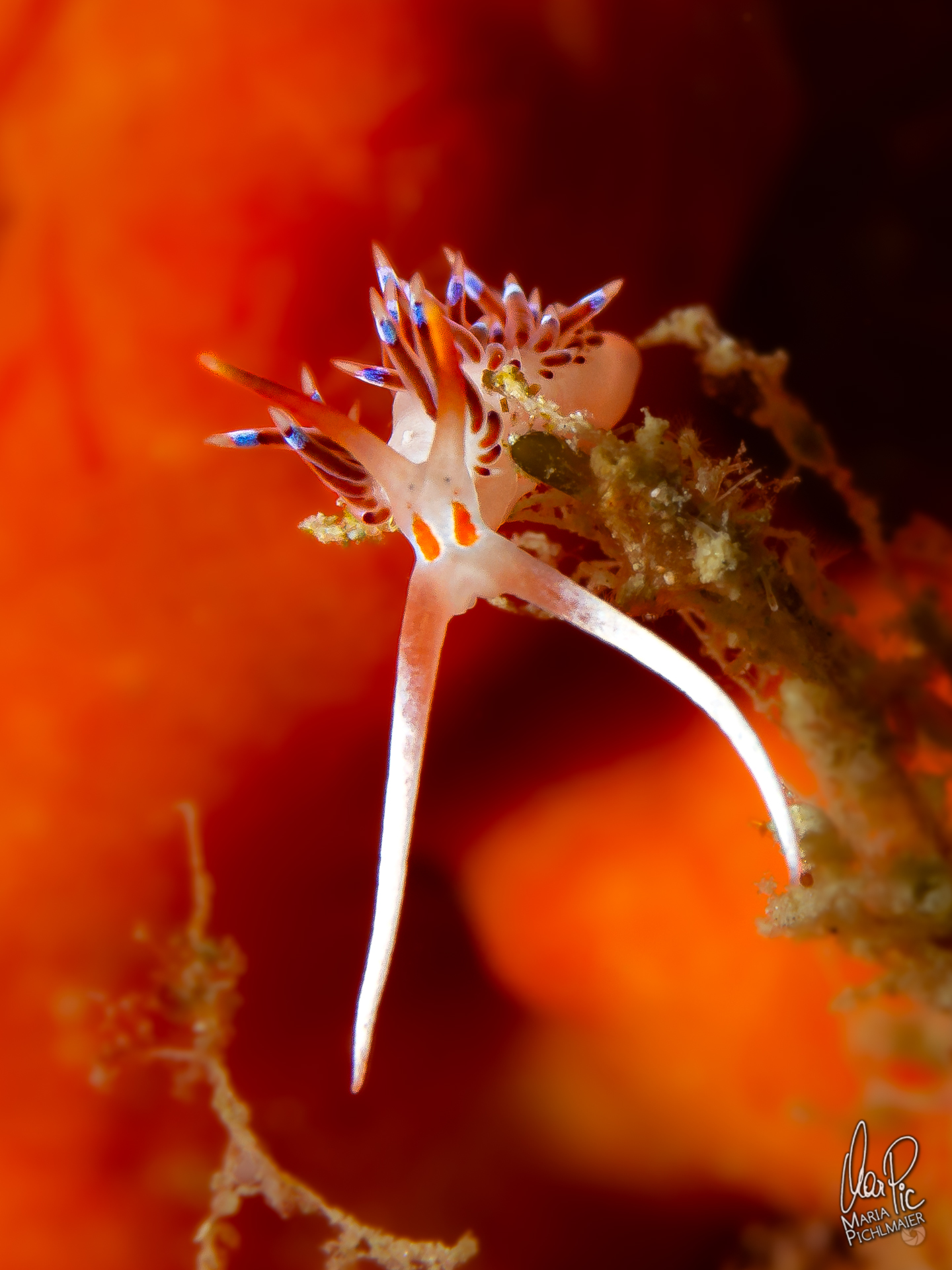
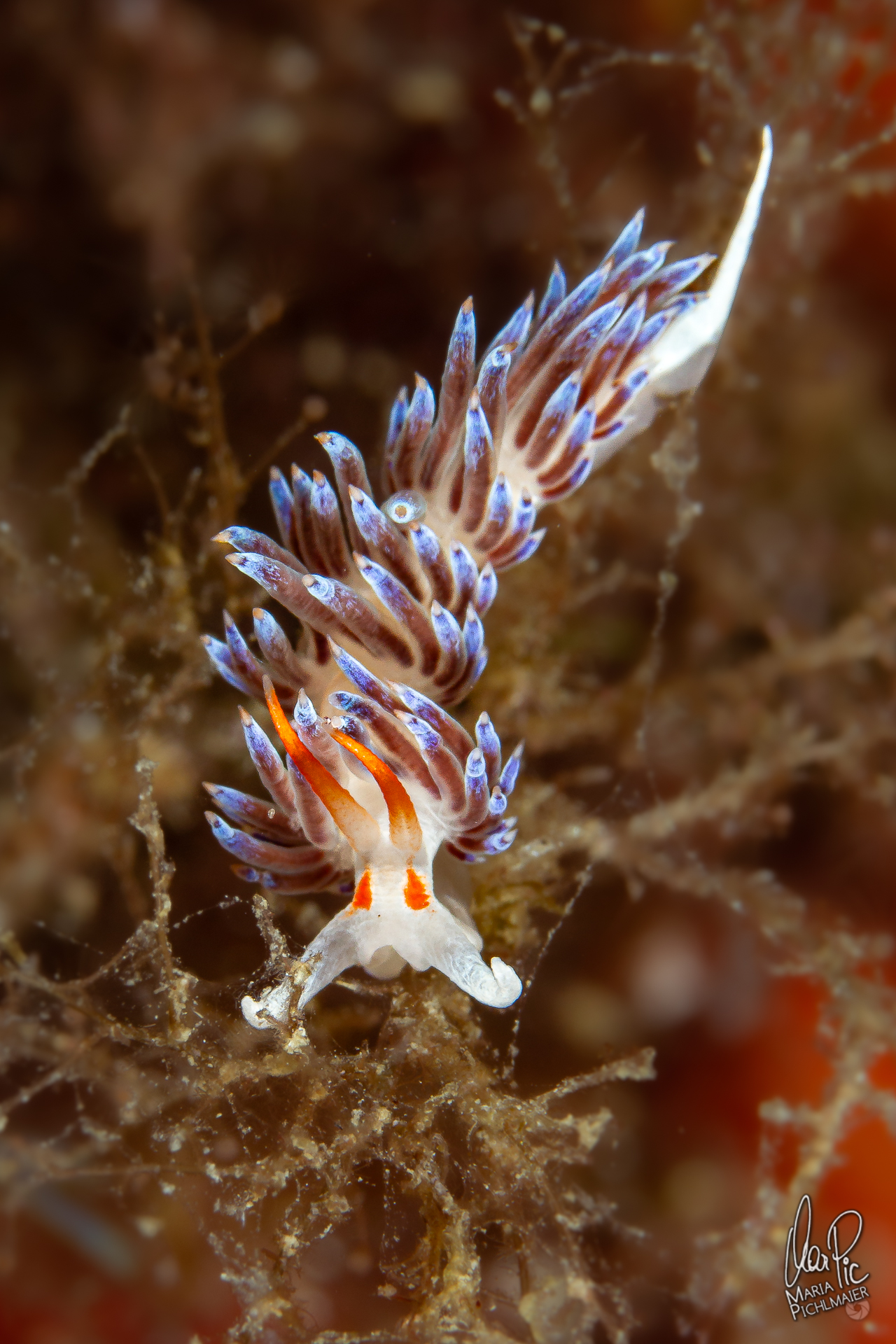
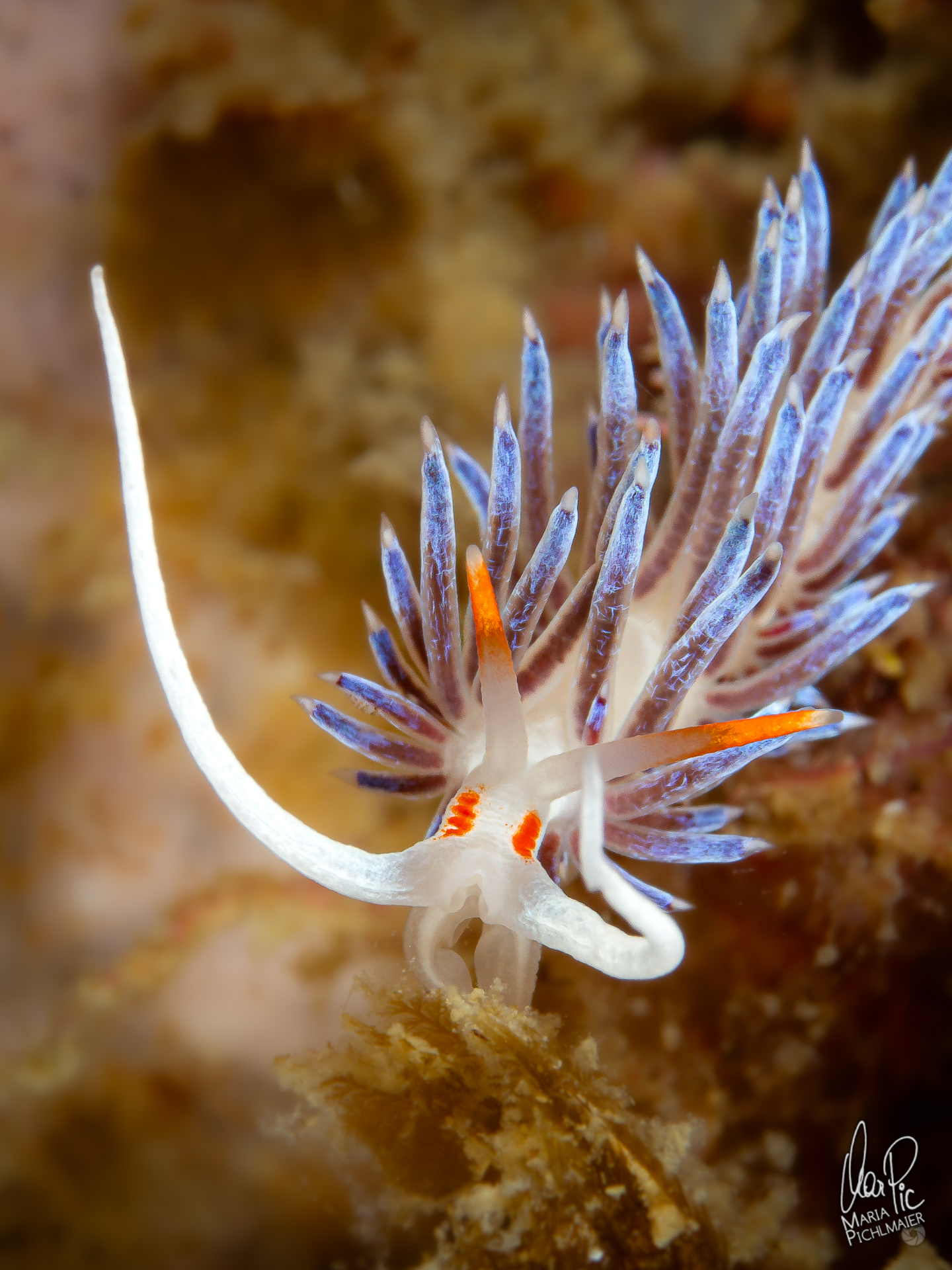
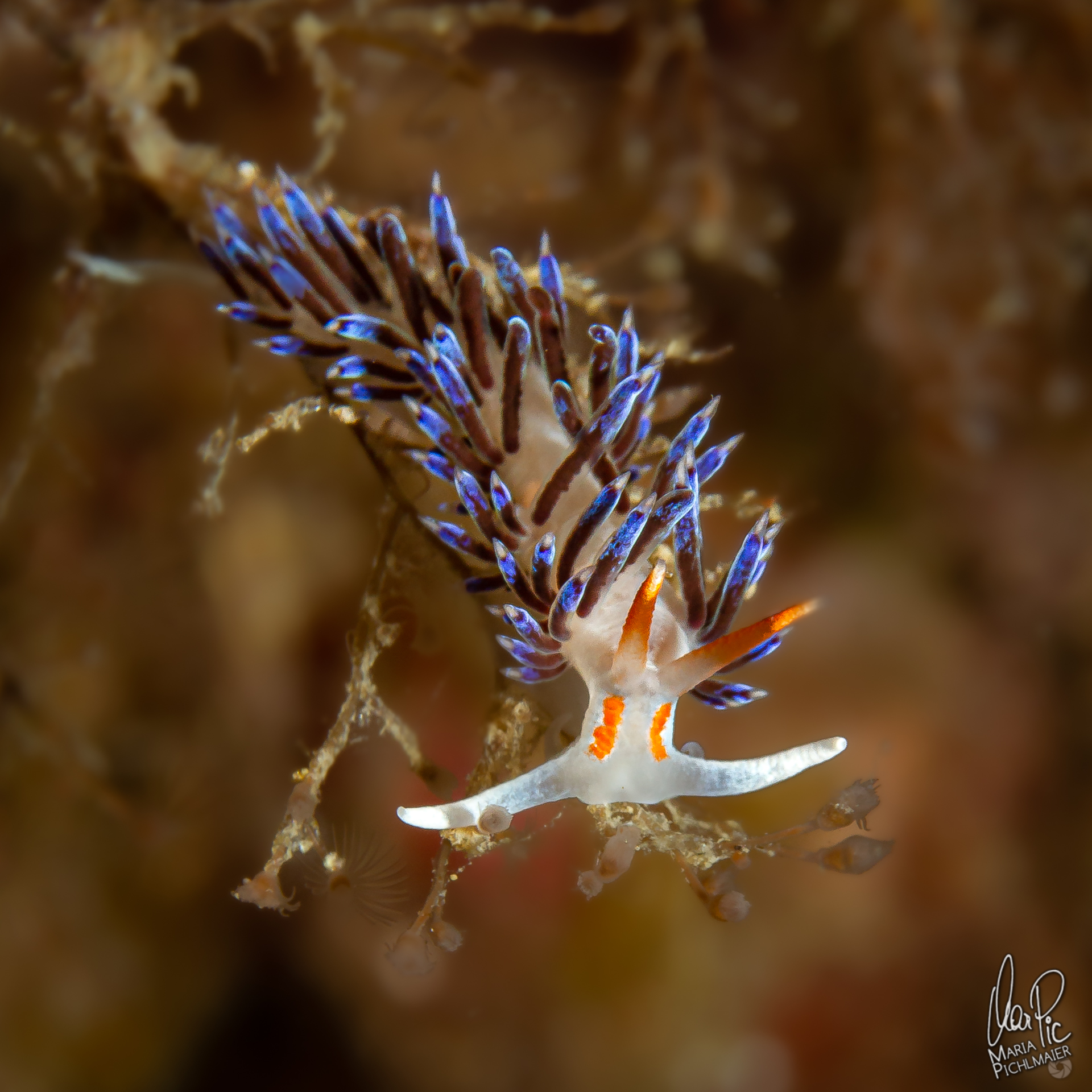
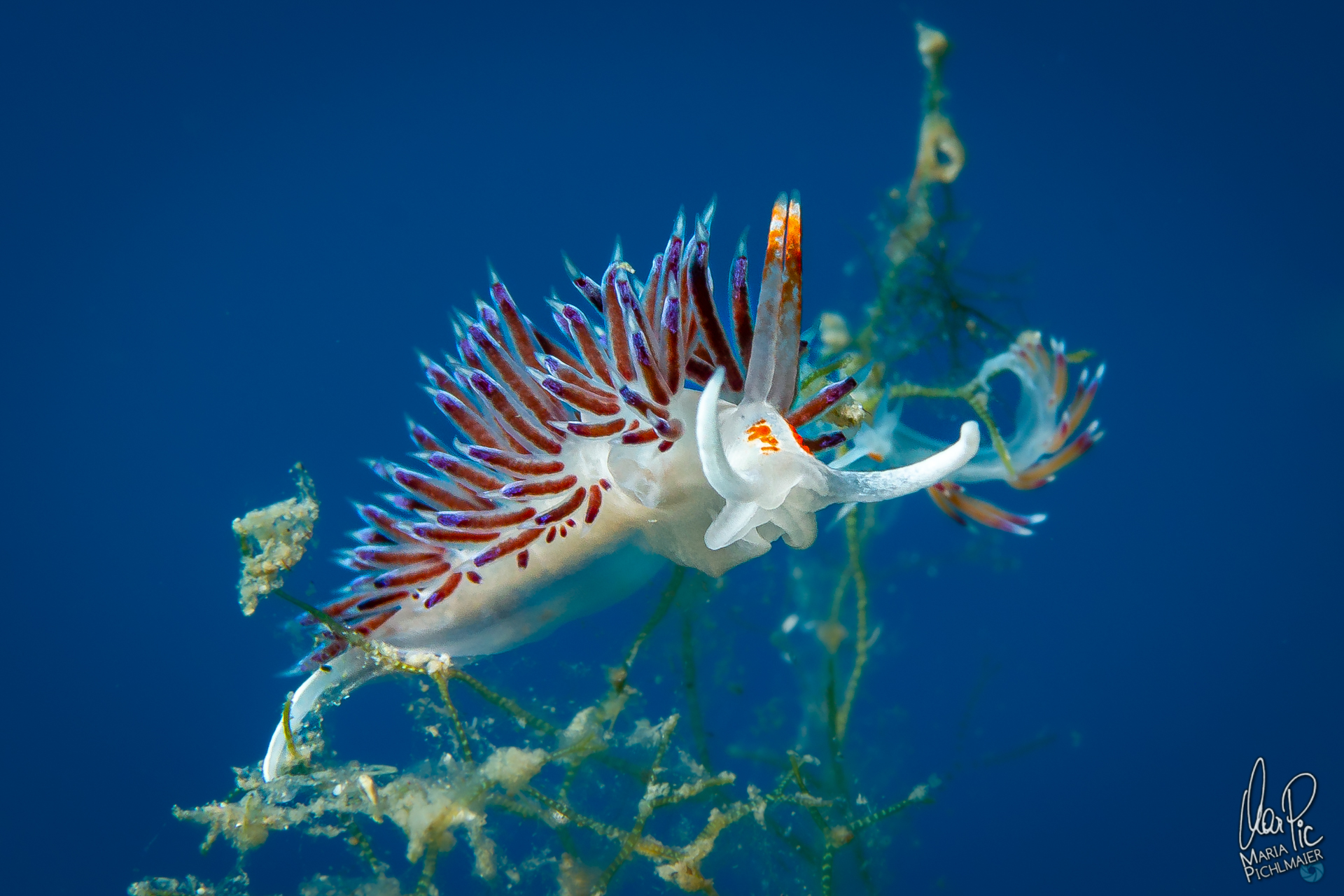
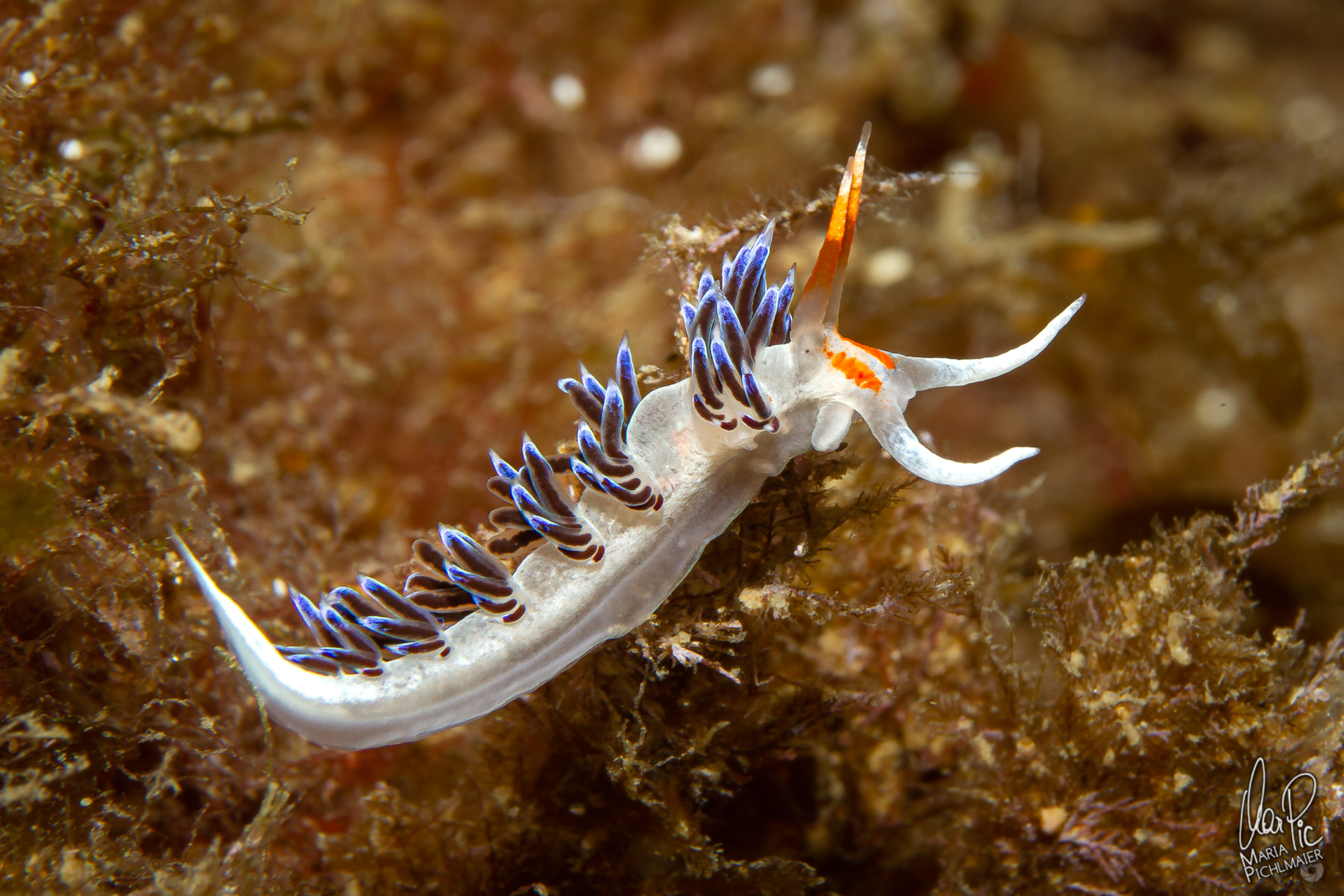
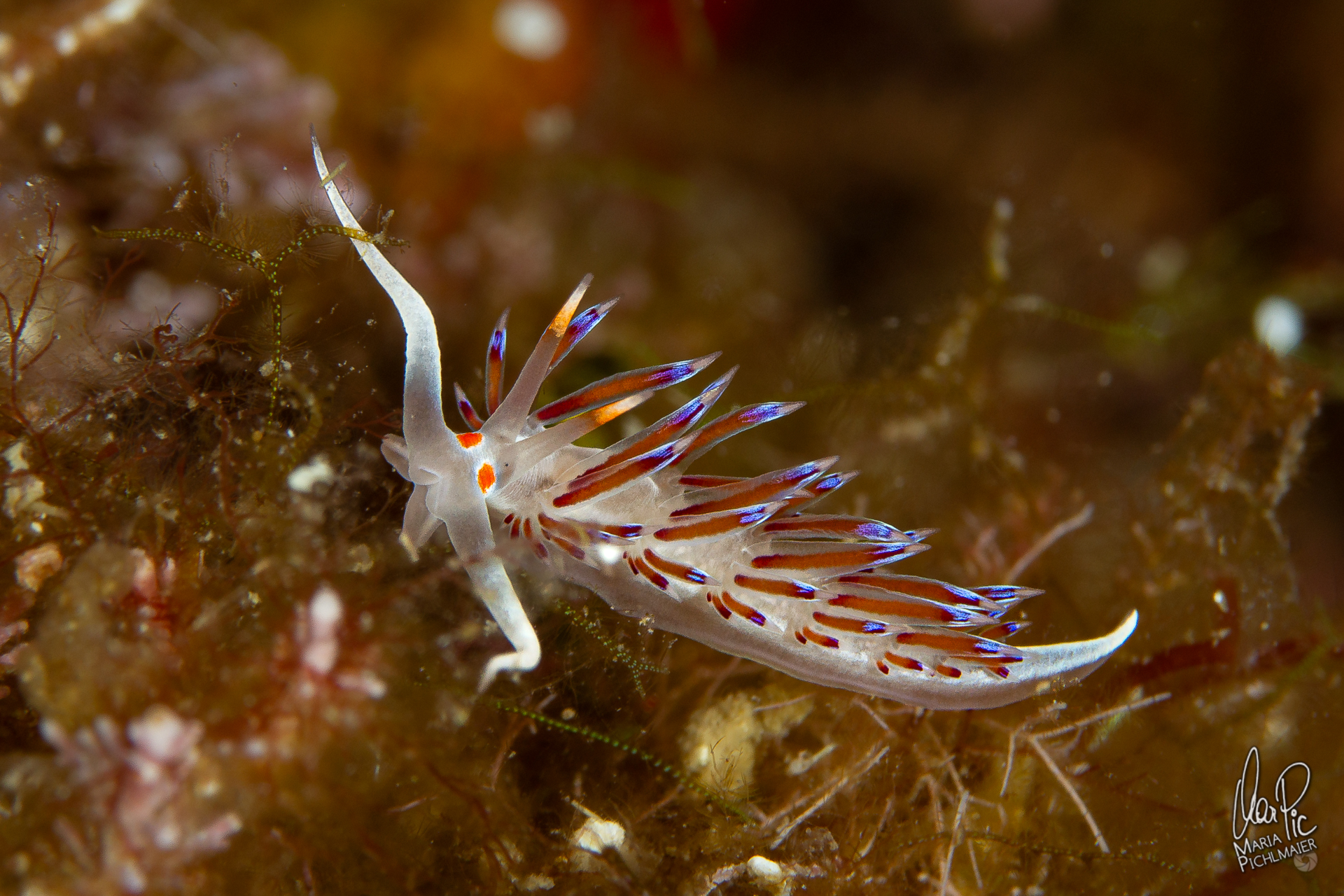
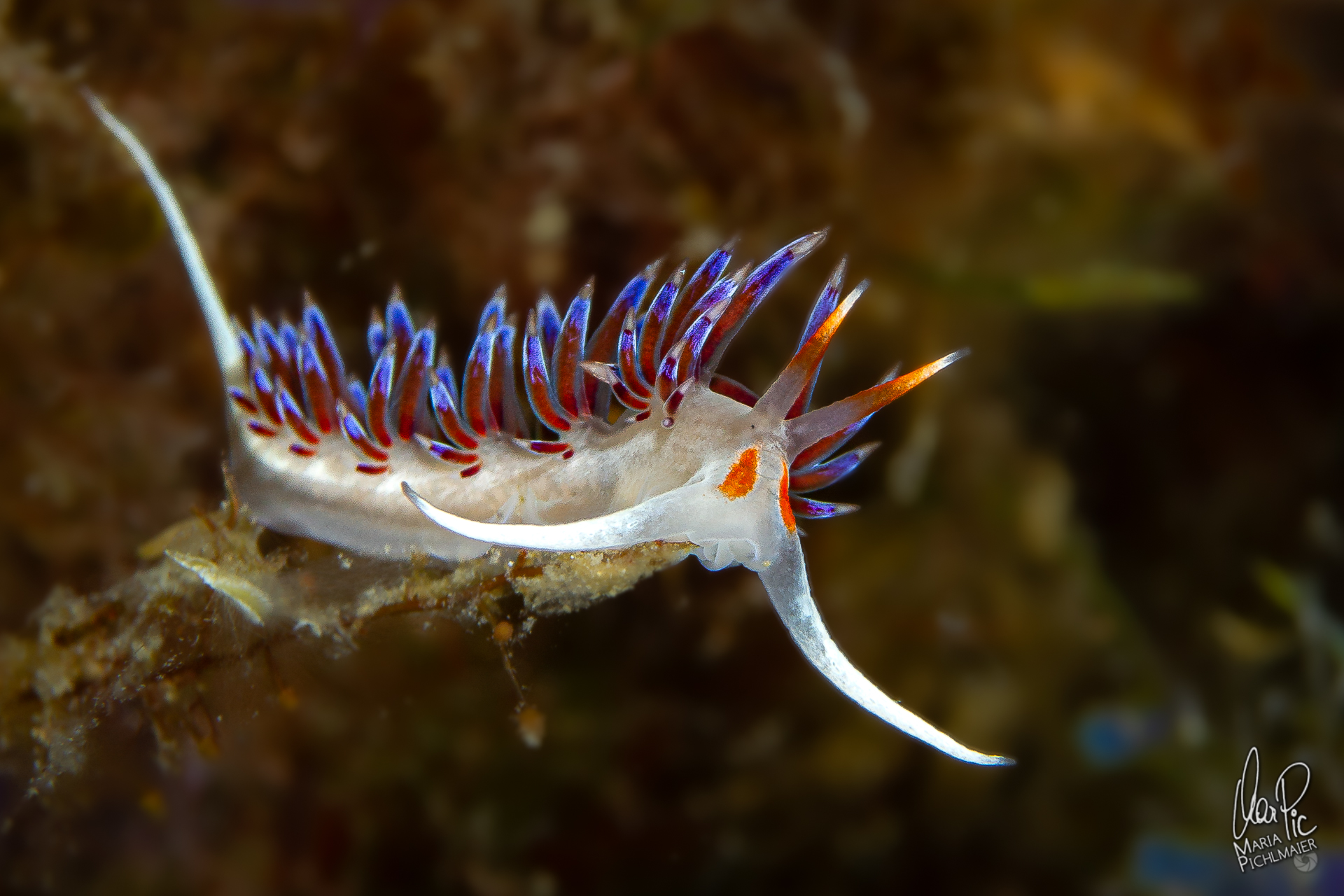
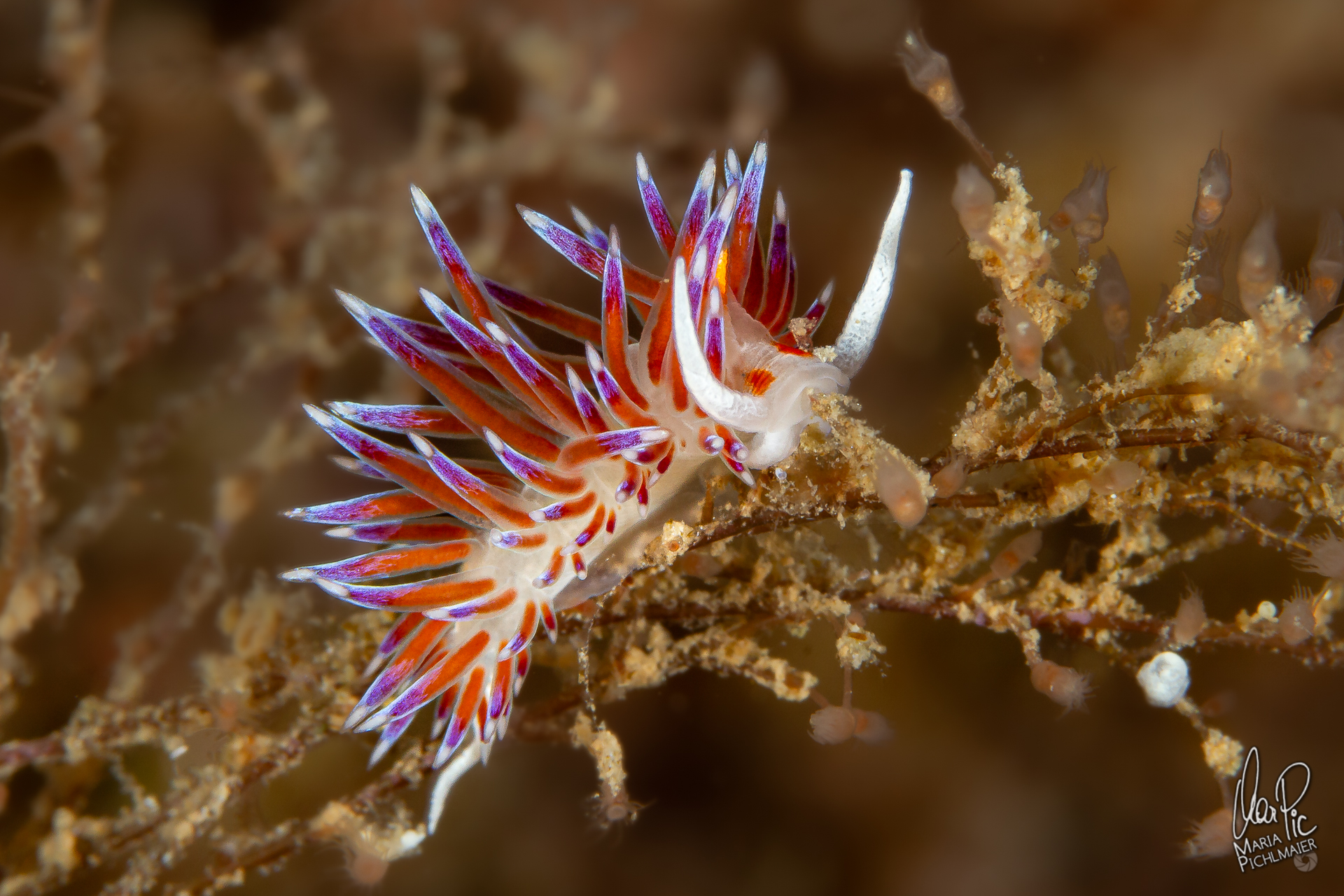
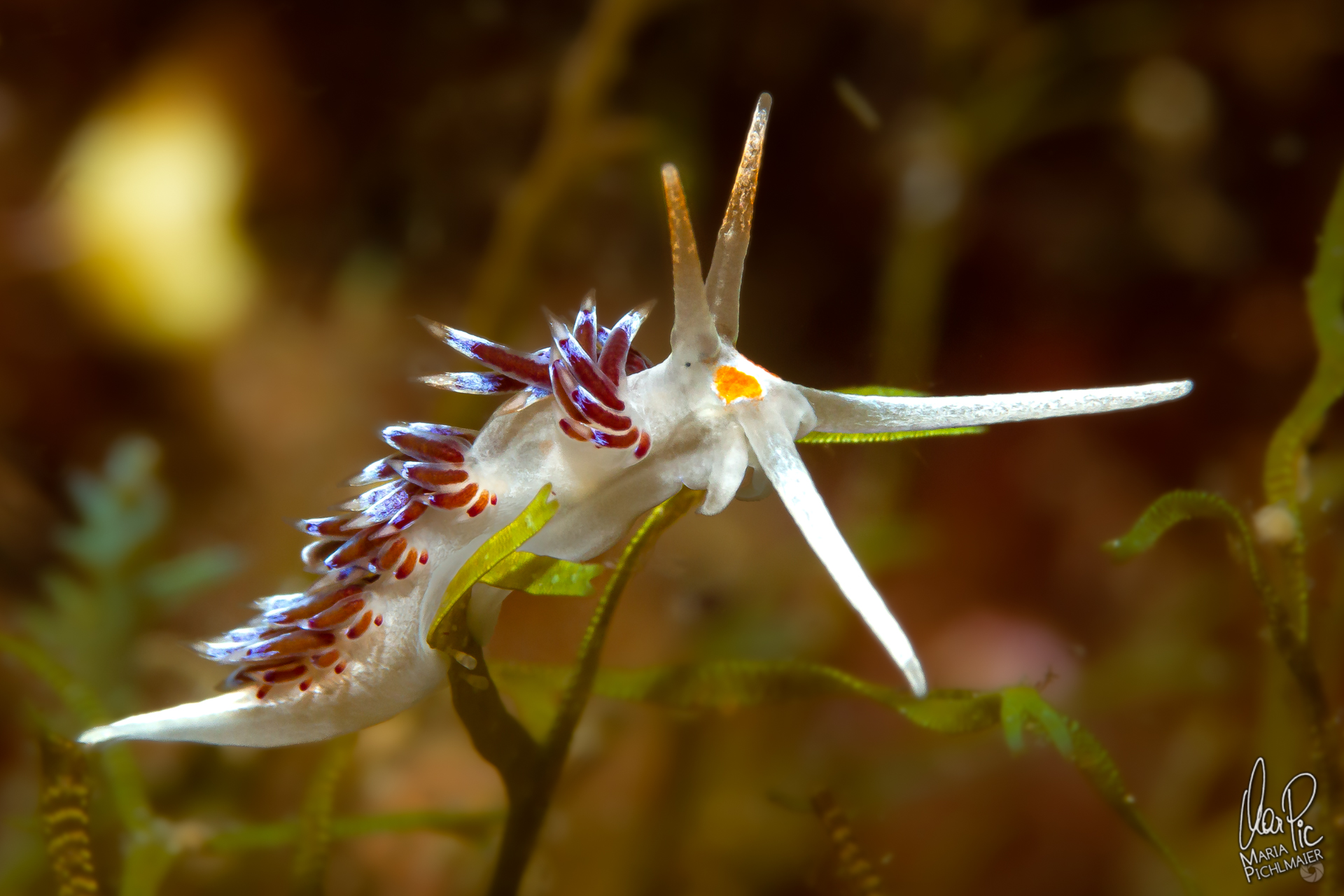
Cratena peregrina (Gmelin, 1791) is one of the most colourful nudibranchs of the Mediterranean — small, bright, and absolutely iconic. It is distinguished by its milky‑white base colour and its vivid cerata, which often show red‑blue iridescence.
It is an aeolid nudibranch of the family Facelinidae and is among the best‑studied Nudibranchia of the Mediterranean region. The species is a model organism for research on kleptocnides, colour morphology, and trophic relationships between nudibranchs and hydroids.
Morphology
- Body structure: Slender and semi‑transparent, with clearly developed rhinophores and oral tentacles.
- Cerata: Arranged in several rows; they contain extensions of the digestive tract.
- Colouration: Variable, depending on diet and the pigments of the hydroids consumed.
- Size: Typically 30–50 mm.
The cerata serve both respiration and defence, as they store the stinging cells obtained from the prey.
Physiology and defence mechanisms (kleptocnides)
C. peregrina is a classic example of kleptocnides:
- When feeding on hydroids, their nematocysts are transported intact through the digestive tract.
- The slug stores them in the tips of the cerata.
- There they become functional and can be discharged when the animal is threatened.
This mechanism is an evolutionarily remarkable example of inter‑phyletic use of prey defence systems.
Feeding and ecology
- Dietary specialist: Mainly hydroids of the genus Eudendrium.
- Trophic role: Secondary consumer in benthic hard‑substrate communities.
- Sublittoral rock walls, seagrass edges, artificial structures.
- Distribution:
- Mediterranean (common)
- Atlantic coast from Portugal to Senegal
- Canary Islands
The species is considered an indicator of healthy hydroid colonies, as it depends on their presence.
Reproduction and development
- Reproduction: Hermaphroditic, with internal fertilisation.
- Egg masses: Spiral bands, usually deposited on or near the hydroids that serve as food.
- Larvae: Planktotrophic veliger larvae that metamorphose after a pelagic phase.
The duration of the larval phase influences dispersal capacity and explains the wide distribution of the species.
Systematics and research history
- Original description in 1791 by Gmelin.
- Historically reclassified several times (including Doris peregrina, Cuthona peregrina, Hervia costai).
- Molecular studies confirm its placement within the family Facelinidae and show low genetic differentiation between Mediterranean and Atlantic populations.
Bedeutung für die Forschung
Cratena peregrina is relevant for studies on:
- Nesselzell-Transportmechanismen
- Chemical ecology (for example, how nudibranchs detect their prey)
- Colour and pigment biology
- Larval dispersal models in the Mediterranean
- Evolution of defence strategies in Nudibranchia