YouTube
 Facebook
 Instagram
 Newsletter
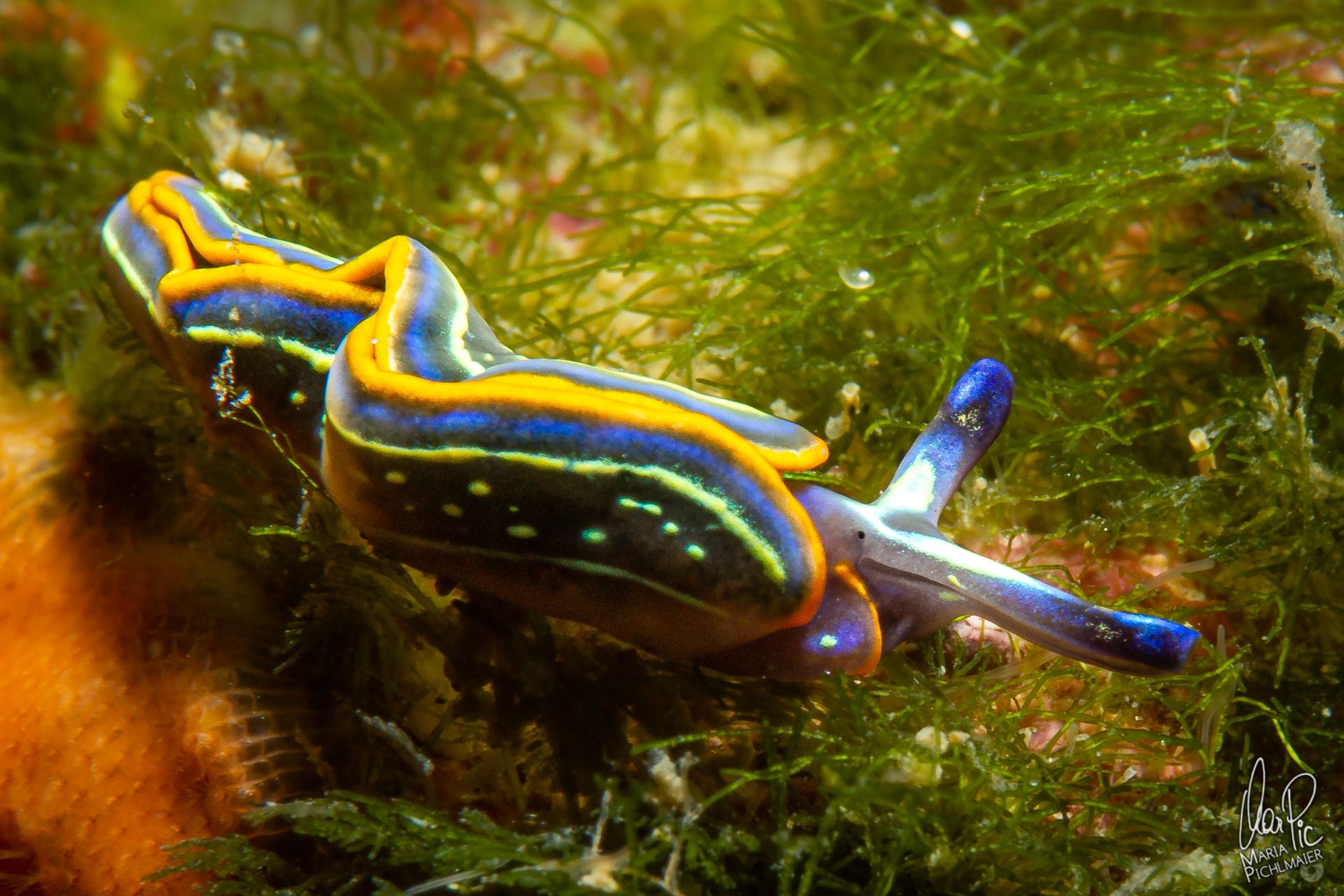
Thuridilla hopei
DE: Gestreifte Flügelschnecke
EN: Hopes elysia
ES: Thuridilla de Hope
FR: Thuridille de Hope
Thuridilla hopei – Hope’s elysia
Description
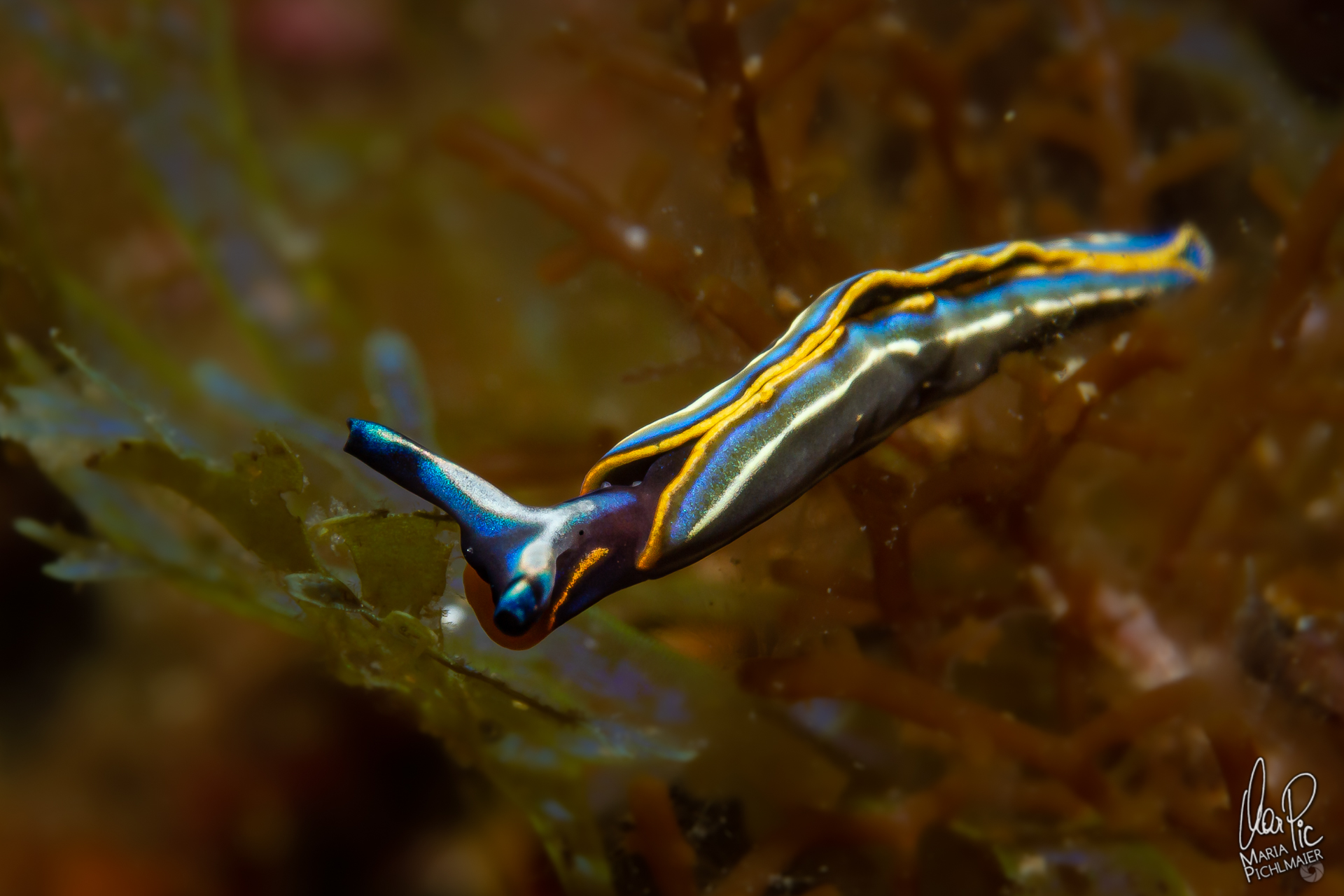
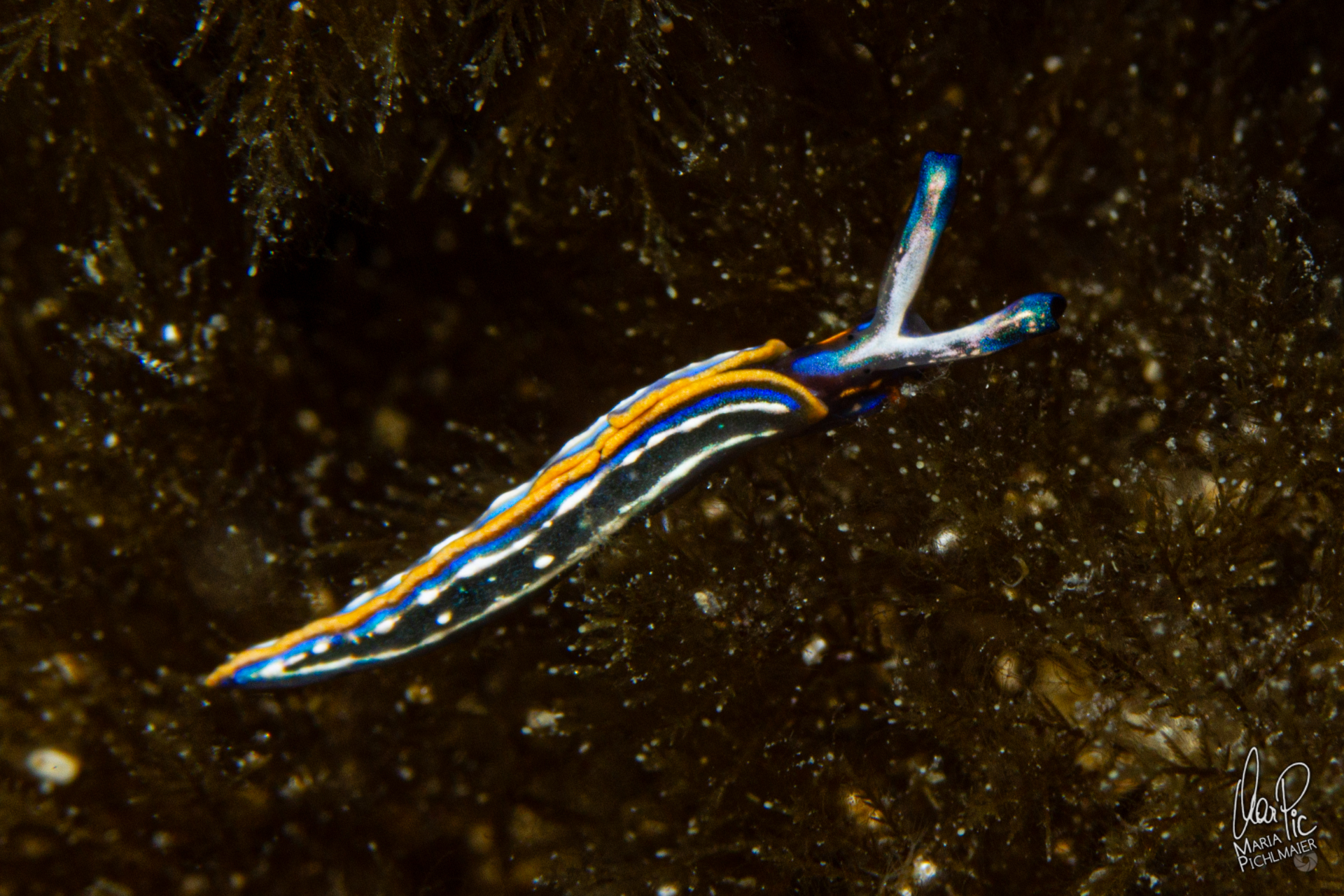
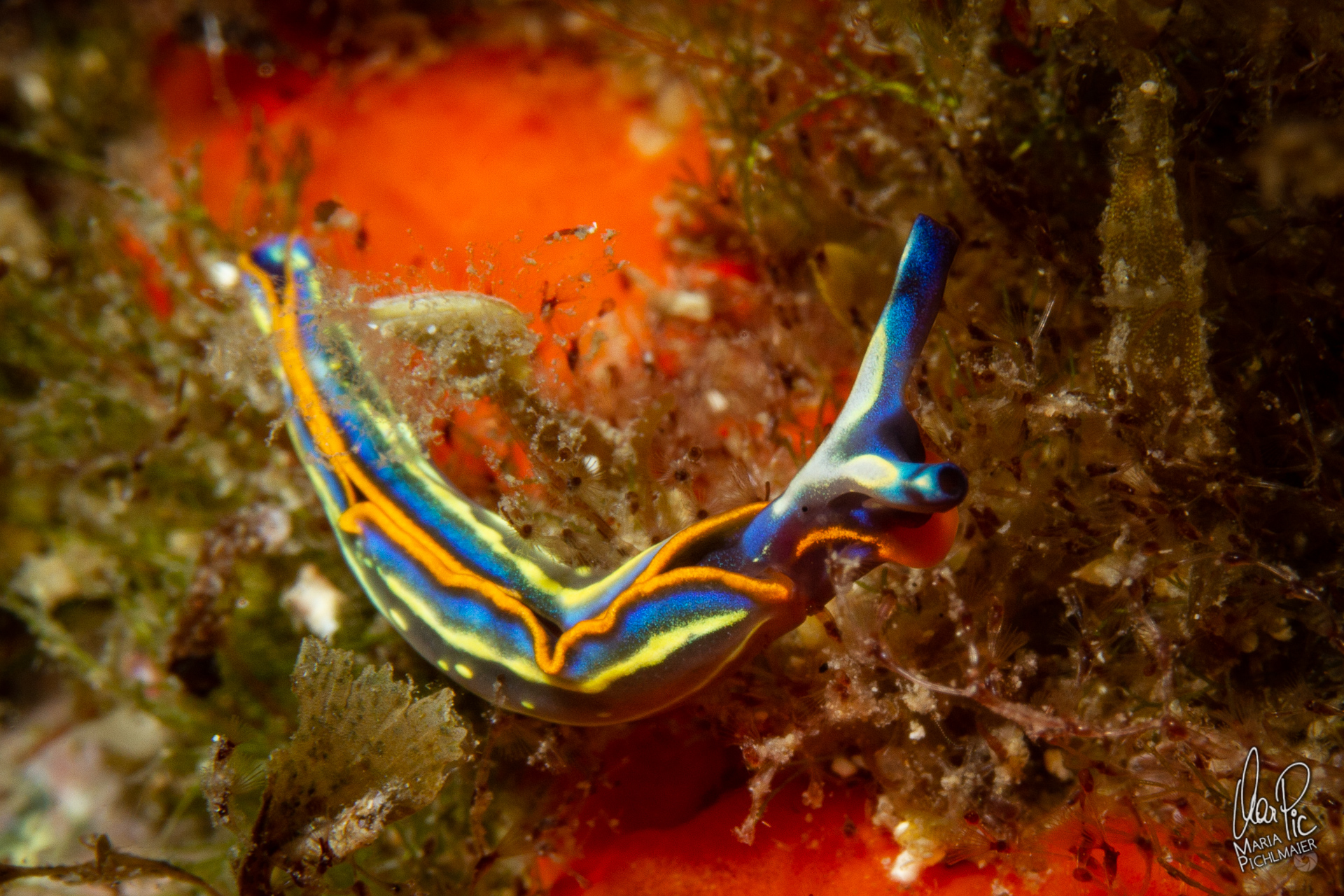
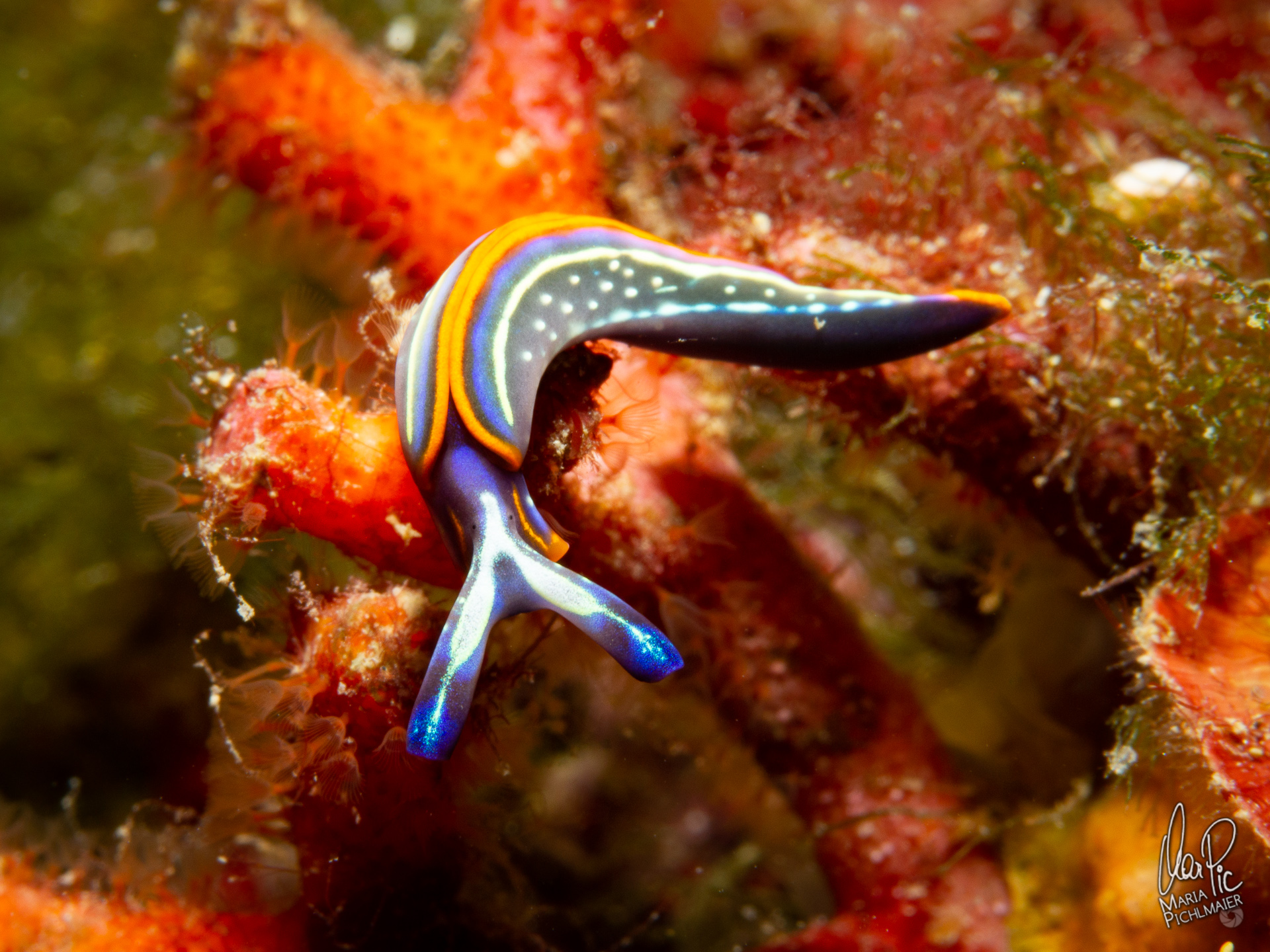
Thuridilla hopei is a colorful sea slug belonging to the Plakobranchidae family (Order: Sacoglossa). It reaches a size of up to 25 mm and has a slender, shiny body with striking blue or greenish spots on the head region. The parapodia (lateral body lobes) are usually held close to the body but can be spread out laterally when the animal is at rest.
Diet
Thuridilla hopei feeds exclusively on algae of the genera Caulerpa, Cladophora, and Derbesia. Remarkably, it can incorporate the chloroplasts from these algae into its own body, allowing it to perform photosynthesis and gain additional nutrients from sunlight—a phenomenon known as kleptoplasty.
Lifestyle
- Habitat: It is endemic to the Mediterranean Sea and lives in shallow to subtidal zones (1–30 meters deep), often on rocky substrates with algal growth or under stones.
- Reproduction: Thuridilla hopei is a hermaphrodite with cross-fertilization. Eggs are laid in the form of a flat spiral on the substrate. Embryonic development is lecithotrophic (nutrients come from the yolk).
- Activity: It is very active and moves around on algae-covered rocks.
Fun Facts
- Color Variations: The color patterns of Thuridilla hopei are related to the depth at which it lives. Individuals living at greater depths may have darker or less conspicuous patterns.
- Chemical Defense: It can extract defensive substances such as thuridillines from its algal diet, which protect it from predators.
- Synonyms: The species was previously known by the names Actaeon hopei, Elysia cyanea, and Elysia splendida.